The Biosphere
Populations, Communities, and Ecosystems
The biosphere can be organized into several different levels of function. We have already investigated one of these levels – the species. A species can be examined from two extremes. At one level, we can consider and study a single individual as representative of the entire species. We can also consider a species to be composed of many individuals who are genetically slightly different from each other. Life can also be organized into several other levels of ecological complexity and function. These levels are called populations, communities, and ecosystems.
Populations
A population consists of all the members of a particular species in a specific area or region at a certain moment (Figure 11.21). A population is more than just a subset of all the individuals in a species, because not all individuals in a population are identical. Populations contain genetic variation within themselves and between other populations. Even fundamental genetic characteristics such as fur color or size may differ slightly from individual to individual. Further, not all members of the population are identical in their ability to survive and reproduce. This fact acts as survival insurance when times get tough. Having genetic diversity increases the likelihood that the population will survive environmental changes.
Communities
Community refers to all the populations of different species in a specific area or region at a particular time (Figure 11.22). Communities involve various abiotic and biotic interactions among different species. Some of these interactions affect the acquisition and use of food, space, or other environmental resources. Other interactions can involve nutrient cycling or mutual regulation of population sizes through predator/prey relationships. In all of these cases, the structured interactions among populations lead to situations in which individuals are thrown into life-or-death struggles.
In general, ecologists believe that a community with a high diversity is more complex and stable than one with a low diversity. This theory is based on the observation that the feeding structures of communities with high diversity are much more interconnected. Greater interconnectivity makes these systems more resilient to disturbances. If a species is removed, those species that relied on it for food can switch to several other species that occupy a similar role in that ecosystem. In a low-diversity ecosystem, possible food substitutes may be nonexistent or scarce.
Ecosystems
Ecosystems are dynamic entities composed of the biological community and the abiotic environment (Figure 11.23). An ecosystem's abiotic and biotic composition and structure are determined by the state of several interrelated environmental factors. Changes in any of these factors (for example, nutrient availability, temperature, light intensity, grazing intensity, and species population density) will result in dynamic changes to the nature of these systems. For example, a fire in a temperate deciduous forest completely changes the structure of that system. There are no longer any large trees; most of the mosses, herbs, and shrubs that occupy the forest floor are gone, and the nutrients stored in the biomass are quickly released into the soil, atmosphere, and hydrologic system. After a short period of recovery, the community that was once composed of large, mature trees becomes one of colonizing grasses, herbaceous species, and tree seedlings.
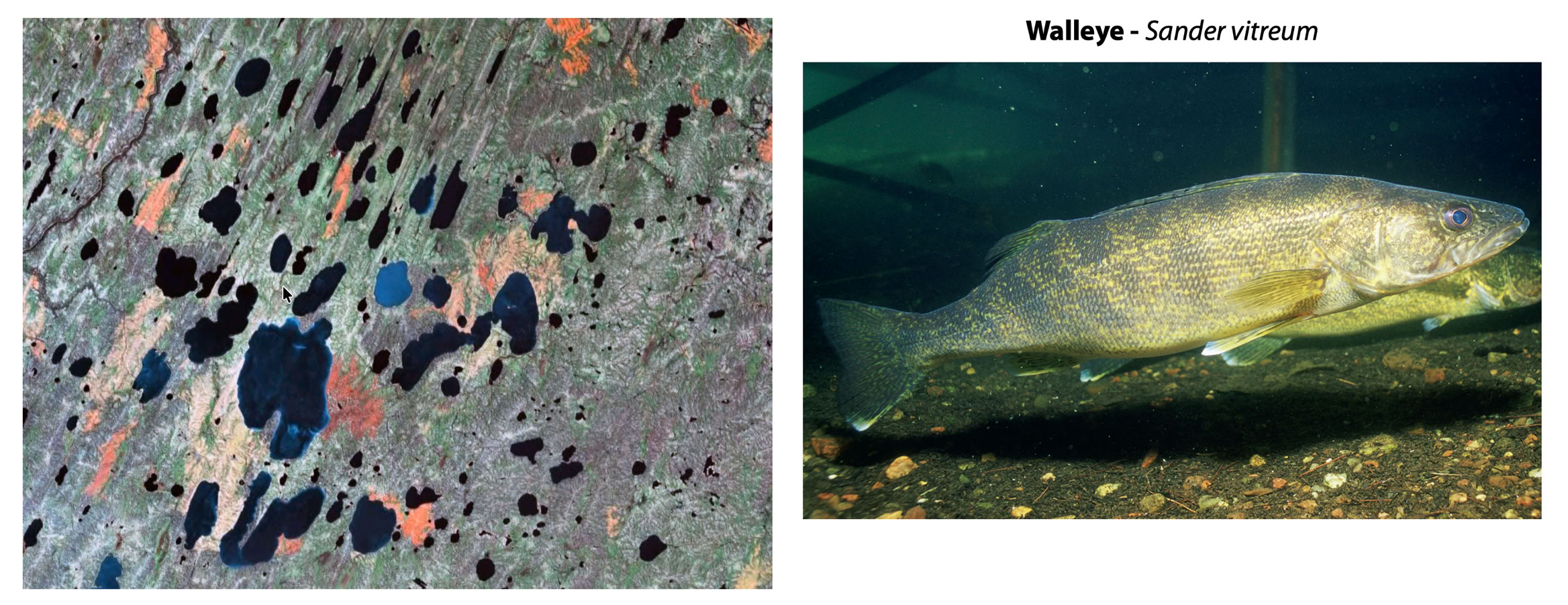
FIGURE 11.21 Populations are distinct groupings of individuals of the same species. In many cases, these groupings are, to some degree, isolated from each other. For example, the photo above shows many separated lakes in Northern Canada. These lakes (left image) share similar fish species, such as the Walleye (Sander vitreum). For the most part, the various walleye populations in these lakes are isolated from one another because many of the lakes do not connect. As a result, any member of a walleye population in an isolated lake can only breed with the other individuals found in that water body. Yet, in years when flooding occurs could cause the transfer of individuals between lakes. Image Source: Left, Google Earth, and right, Wikimedia Commons, U.S. Fish and Wildlife Service.
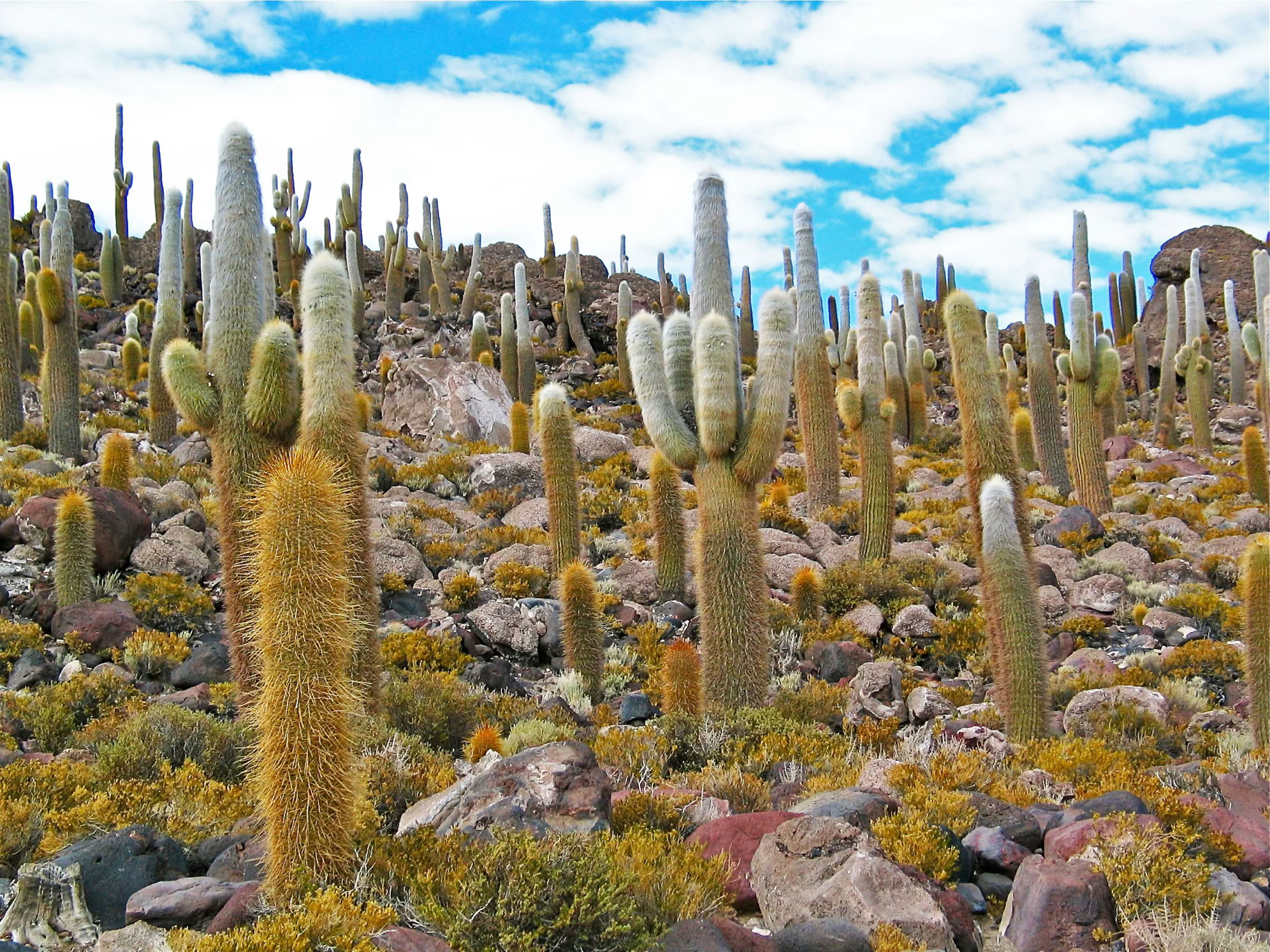
FIGURE 11.22 A community is defined as all the populations of different species in a specific area at a particular time. This photo shows a community of drought-resistant plant species native to Incahuasi Island, Salar de Uyuni, Bolivia, South America. Image Copyright: Jeff Gunn.
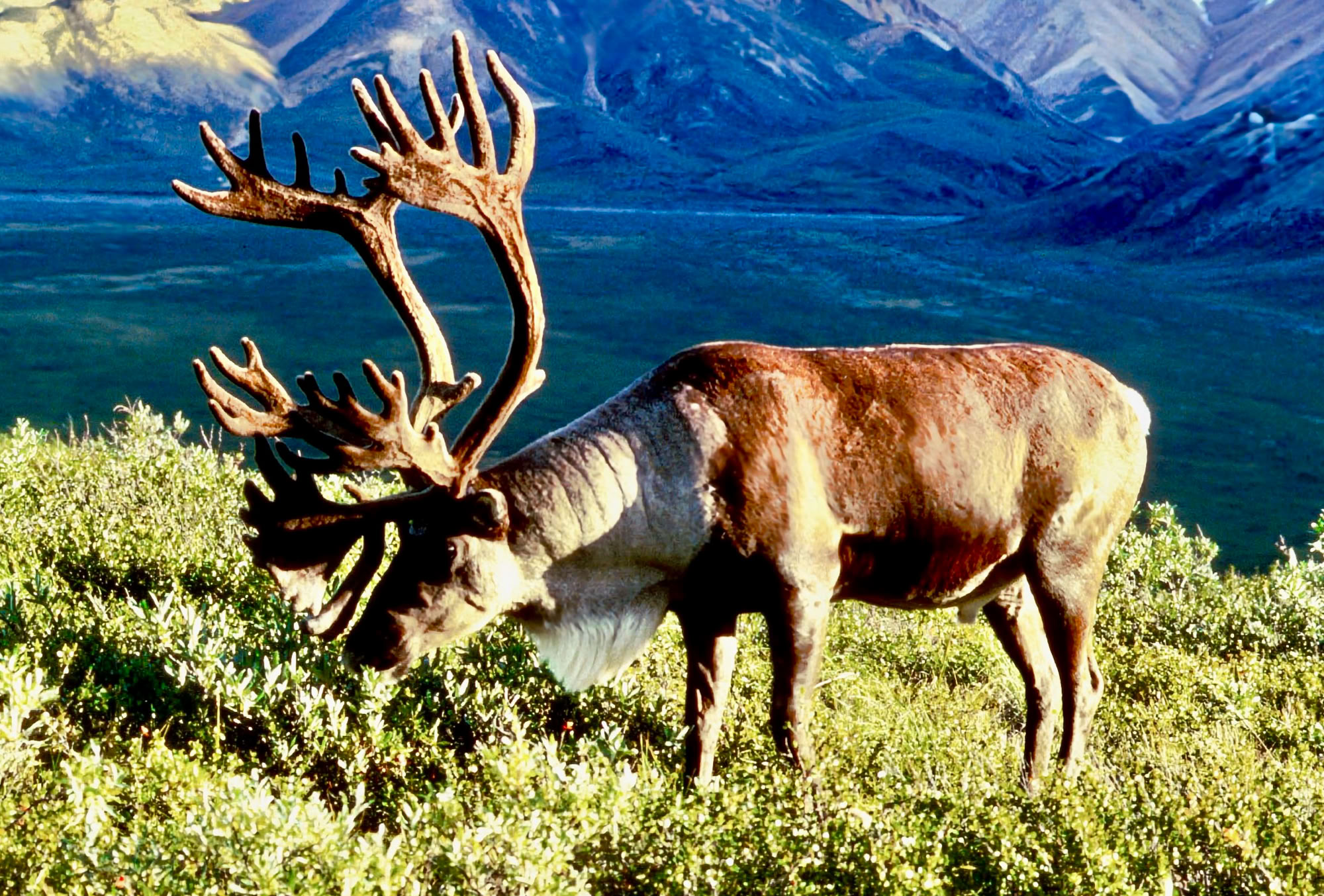
FIGURE 11.23 Ecosystems are dynamic entities composed of two interacting parts – a biological community and the abiotic environment. Shown here is the Arctic tundra ecosystem. This biological community consists of lichens, mosses, sedges, shrubs, dwarf willows, and a grazing Caribou. This biological community is adapted to survive a harsh, nutrient-poor environment with short summers and extremely cold winters. Image Source: Wikimedia Commons, U.S. Fish and Wildlife Service, photo by Dean Biggins.