Elements and Compounds
Matter is the material that makes up living and nonliving things in the Universe. All matter on the Earth is constructed of elements. Chemists have described approximately 115 different elements. Each of these unique elements has distinct chemical characteristics. Table 3.2 lists some of the chemical characteristics of 48 common elements found in the Earth's continental crust.
The smallest particle that exhibits the unique chemical characteristics of an element is known as an atom. Atoms are composed of even smaller particles: protons, neutrons, and electrons (Figure 3.15). A proton is a subatomic particle that has significant mass and contributes a single positive electrical charge to an atom. Neutrons also have significant mass but no electrical charge. Electrons are extremely light subatomic particles having a mass that is 1/1840 of a proton. Each electron also has a negative electrical charge.
Protons and neutrons make up the nucleus of an atom (Figure 3.15). As a result, most of an atom's mass is concentrated in the nucleus. Because protons are positively charged, the nucleus has a positive charge equal to the number of these subatomic particles. Electrons are found orbiting outside the nucleus at various distances based on their energy level. The area occupied by the electrons has a negative charge equal to the number of these subatomic particles. If an atom has an equal number of electrons and protons, its net electrical charge is zero. The atom's charge is negative if there are more electrons than protons. Likewise, the atom's charge is positive if there are fewer electrons than protons. In both cases, the exact charge is determined by subtracting the number of protons from that of the electrons. For example, 4 protons minus 6 electrons give an atomic charge of -2.
Atomic number describes the number of protons found in an atom. For example, silver has an atomic number of 47 or 47 protons in its atom (Table 3.2). The atomic mass number is an atom's total number of neutrons and protons. Many elements have unequal numbers of neutrons and protons in their nucleus. Some elements can have variants containing different numbers of neutrons but similar numbers of protons. We call these variants isotopes. Carbon has three naturally occurring isotopes. The most common isotope form is carbon-12, which has 6 protons plus 6 neutrons (Figure 3.15). About 99% of the carbon on our planet is of this type. The isotope carbon-13 has 6 protons plus 7 neutrons. Carbon-14 is a rare isotope of carbon containing 6 protons and 8 neutrons. Some isotopes are unstable, and their nuclei tend to lose subatomic particles, forming an element with a lower atomic mass. This process is known as radioactive decay. An element's atomic weight refers to the total weight of neutrons, protons, and electrons. For example, the atomic weight of aluminum is 26.98 (Table 3.2).
Elements can be classified as either metals, nonmetals, or metalloids (Table 3.2). Metals are elements that usually have the ability to conduct heat and electricity and have a shiny appearance. Some metals commonly used by humans include iron, zinc, nickel, copper, silver, platinum, and gold. Nonmetals do not conduct electricity that well and usually are not shiny. Metalloids have characteristics that are in between metals and nonmetals.
When atoms of the same chemical element bond together, they construct molecules. Atoms of different elements joined together to form atomic structures called compounds (Figure 3.16). Sodium chloride (or table salt) is a compound consisting of positively charged sodium (Na+) and negatively charged chloride (Cl-). In nature, it forms as a three-dimensional array of oppositely charged ions (Figure 3.17). Many of Earth's natural substances have molecular structures similar to those of sodium chloride.
Atoms, molecules, or compounds with a net positive or negative charge are called ions. Chemists use a superscript after the element's symbol to indicate the number of positive or negative charges on an ion. For example, calcium ion has two positive charges and is written as Ca2+. Some common negatively charged ions include nitrate (NO3-), sulfate (SO42-), and phosphate (PO43-). Positive and negative ions are electrically attracted to each other. This mutual attraction allows atoms to bond, forming larger structures of matter beyond a single atom.
Properties of Matter
Matter has three physical properties: mass, volume, and density. We often think of an object’s mass as its weight. This statement is not entirely correct. Weight is the force caused by the strength of gravity on a mass. If gravity changes, weight also changes, but the mass remains the same. So what is mass? We can define mass as a measure of a body’s resistance to movement. From this definition, we can suggest that the more massive a body is, the harder it is to move. The definition also suggests that more massive bodies are harder to stop once an object is in motion. Mass will be normally measured in this textbook in units of grams (g) or kilograms (kg).
Volume is the second fundamental property of matter. This property is related to space. Quite simply, volume measures the amount of space an object occupies. It is also important to realize that two objects cannot occupy the same space. Volume is primarily measured in this textbook in cubic meters (m3) or cubic centimeters (cm3).
Density is a property of matter related to mass and volume. It is defined as the quantity of mass found in a given volume. Typical units used in the density measurement are grams per cubic centimeter (g cm-3 or g/cm3) and kilograms per cubic meter (kg m-3 or kg/m3).
Phases of Matter
The phases of matter can be classified into solids, liquids, and gases. All forms of matter usually change their phase when specific temperature thresholds are passed. Phase changes also result in specific alterations in the characteristics of matter (Table 3.3). Let us consider the phase changes of water. Cooling water to below 0°C (32°F) freezes into a solid. In this phase, its molecules become highly organized through cohesive bonds and assume a geometric shape. If we add heat to the ice, the energy will accumulate in its molecules until a threshold is reached, causing it to change phase to liquid. In the liquid phase, the molecules are still densely packed and cohesive with each other, but can still move or flow freely. Continuing to add even more heat energy, we reach another threshold where the liquid water transforms into a gas called water vapor. Water vapor contains enough energy to break cohesive bonds between molecules. This energy allows them to move even more freely, enabling them to completely fill the space.
Types of Matter
We can suggest two types of matter: organic and inorganic. Compounds and molecules constructed in living tissues are commonly called organic. Forms of matter not produced by living things are termed inorganic.
There are four general categories of organic compounds: lipids, carbohydrates, proteins, and nucleic acids. Lipids are organic molecules composed of carbon atoms with two hydrogen atoms attached. These molecules are more commonly known as fats and oils. Lipids also belong to the family of molecules known as hydrocarbons. Carbohydrates are composed of carbon, oxygen, and hydrogen atoms. Examples include sugars, starch, and cellulose. Proteins are organic compounds made primarily of carbon, hydrogen, nitrogen, and some other minor elements arranged into 20 different compounds known as amino acids. Finally, nucleic acids are composed primarily of carbon, hydrogen, nitrogen, oxygen, and phosphorus combinations. They are very complex compounds created by the atomic linking of thousands of atoms. DNA or deoxyribonucleic acid, the genetic blueprint of life, is an example of a nucleic acid.
Cellular Structure of Life
All organisms are composed of one or more cells. Cells are the smallest self-functioning unit found in living organisms. Cells are also where an organism's metabolism and heredity processes occur. The cellular division of a previously existing cell forms new cells. Biologists have differentiated two basic types of cells in organisms. Bacteria, archaea, and cyanobacteria have pretty uncomplicated cells in terms of structure and function. Quite simply, they lack internal organization. These cells are commonly known as prokaryotes (Figure 3.18).
The cells of plants and animals are more complex than those of bacteria, archaea, and cyanobacteria. We identify these cells as being eukaryotic. Eukaryotic cells have a membrane-enclosed nucleus that contains the organism's DNA. Eukaryotic cells are generally larger than prokaryotic cells. Prokaryotic cells range in size from about 1 to 10 µm (micrometers). White blood cells in mammals are among the smallest eukaryotic cells, with a diameter of 3-4 µm. Ostrich ova are very large cells with a diameter of about 100 µm.
Plant and animal cells also contain a variety of membrane-bound structures known asorganelles. Organelles are cellular structures that carry out distinct functions. Within the organelles, enzymes (a type of protein) facilitate and regulate various chemical reactions. Figure 3.19 describes the various structures found in typical plant and animal cells. Table 3.4 describes the function of various cell structures, including many organelles.
Cells can also be classified according to how they obtain their energy. Some cells can use light or chemical energy from the environment to synthesize their sugars, fats, and proteins. We call these types of cells autotrophs. All plant species and a few bacterial species use sunlight and photosynthesis to obtain energy. Some bacteria break down environmental molecules to release chemical energy to sustain their lives. Cells (and organisms) can also obtain their energy by consuming other cells. These cells are called heterotrophs. Heterotrophs include most types of bacteria and all animal and fungal species.
Some organisms consist of just one cell. All species of bacteria and archaea are unicellular. Some algae, fungi, and protists can also exist as single-celled life. Most organisms found on our planet exist in a multicellular form. In multicellular organisms, groups of cells can become specialized to perform specific functions. We call such a functional group of cells a tissue. Some examples of tissues include muscle tissue and nervous tissue, which are commonly found in animals. An organ is a structure composed of several different types of tissues. Organs also have a specific structure and a particular function.


FIGURE 3.17 Sodium chloride is a compound that forms in nature as a highly ordered, three-dimensional network of oppositely charged ions. The bonds that form between the sodium (Na+) and chloride (Cl-) ions give this compound great internal strength, allowing it to form large crystals. Image Copyright: Michael Pidwirny.
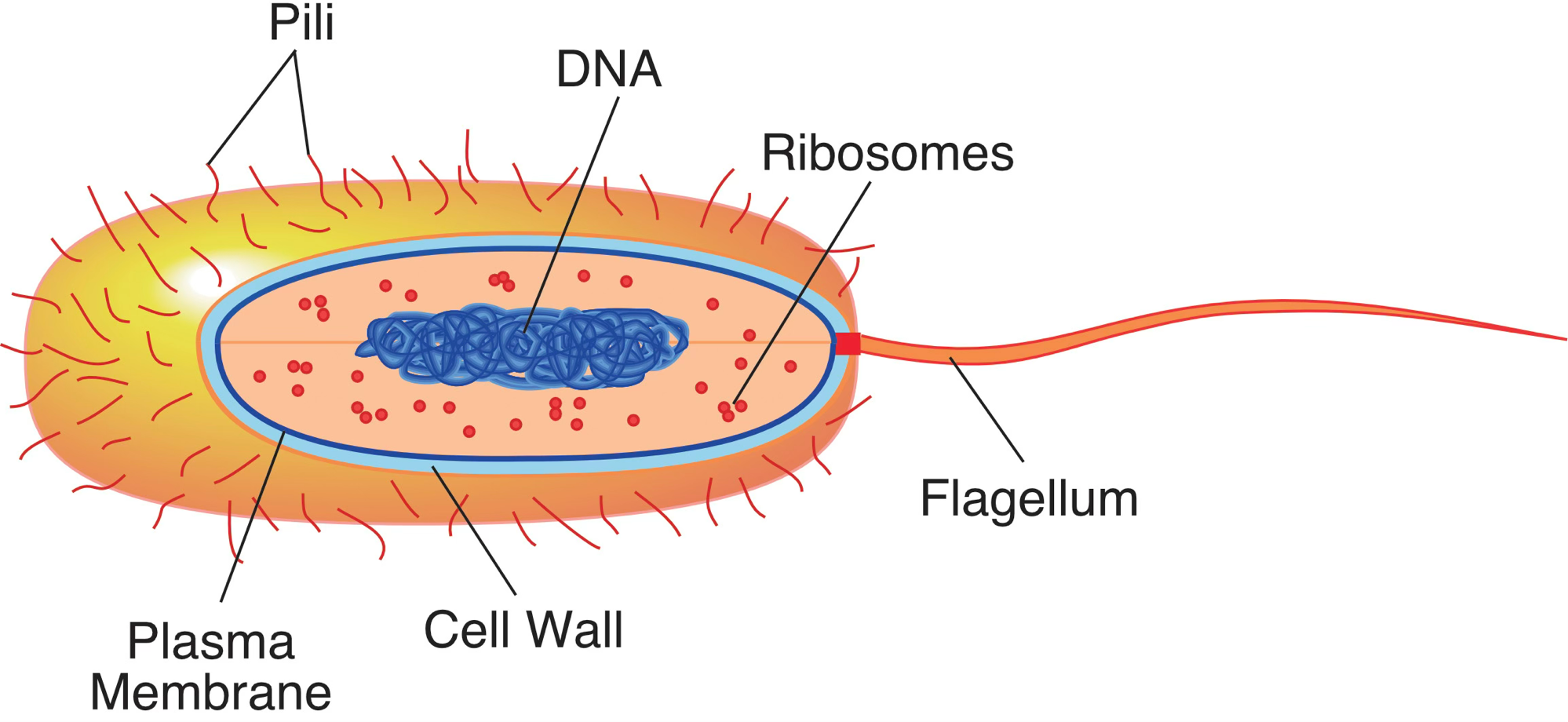

FIGURE 3.19 Typical features of animal and plant cells. Plant cells differ from animal cells in the following ways: they have a cell wall, chloroplasts, do not contain lysosomes, and often have a large central vacuole. Image Copyright: Michael Pidwirny.
FIGURE 3.15 Graphical representation of a carbon-12 atom. Carbon-12 has a nucleus with six neutrons and six protons. Around this nucleus are two orbital shells, containing a total of six fast-moving tiny electrons. Image Copyright: Michael Pidwirny.
FIGURE 3.18 Typical features of a prokaryotic cell. Prokaryotic cells are about 1 to 10 micrometers in size. A rigid cell wall and a plasma membrane encase prokaryotic cells. Within the cell, the two most apparent structures are ribosomes and DNA. In prokaryotic cells, DNA is not found inside a membrane. Many prokaryotic cells also have a flagellum that is used for movement. Image Copyright: Michael Pidwirny.


FIGURE 3.16 Some common molecules and compounds. The molecules in the top row bond to one another by sharing electrons. The compounds in the bottom row also share electrons. All of the chemical bonds shown here are known as covalent bonds. Image Copyright: Michael Pidwirny.