Water is removed from the Earth's surface into the atmosphere by two distinct mechanisms: evaporation and transpiration.Evaporationcan be defined as the process by which liquid water is transformed into a gaseous state. Evaporation can only occur when water is available. It also requires that the atmosphere's humidity be lower than the evaporating surface's (at 100% relative humidity, there is no further evaporation). The evaporation process requires large amounts of energy. For example, the evaporation of one gram of water requires 600 calories of heat energy.
Transpiration is the process of water loss from plants through stomata. Stomata are small openings on the underside of leaves connected to vascular plant tissues (Figure 17.26). In most plants, transpiration is a passive process primarily controlled by atmospheric humidity and soil moisture. Of the water transpired by a plant, only 1% is used in the growth process. Transpiration also transports nutrients from the soil into the roots and carries them to the plant’s various cells, and it helps keep tissues from overheating. In some dry environments, plants can open and close their stomata. This adaptation is necessary to limit water loss from plant tissues. Without this adaptation, these plants would not survive severe drought.
It is often difficult to separate evaporation and transpiration, so scientists use the combined term evapotranspiration. Four factors control the rate of evapotranspiration at any instant from the Earth's surface:
- Energy availability. The more heat energy available, the greater the rate of evapotranspiration. It takes about 600 calories of heat to change 1 gram of liquid water into a gas. Most of the energy used for evapotranspiration comes from sunlight.
- The humidity gradient away from the water surface. The rate and quantity of water vapor entering the atmosphere because of evapotranspiration increases as the air becomes drier. Higher humidities reduce the rate of water transfer.
- The wind speed immediately above the surface. Many of us have observed that our gardens need more watering on windy days than on calm days, even when temperatures are similar. This fact occurs because wind increases the potential for evapotranspiration. The process of evapotranspiration moves water vapor from the ground or water surfaces to an adjacent shallow layer that is only a few centimeters thick. When this layer becomes saturated, evapotranspiration stops. However, wind can remove this layer, replacing it with drier air, increasing the potential for evapotranspiration.
- Water availability. Evapotranspiration cannot occur if its main component, water, is in short supply.
On a global scale, most of the evapotranspiration of water from the Earth's surface occurs in the subtropical oceans (Figures 17.27 and 17.28). High solar radiation input in these areas provides the energy required to convert liquid water into a gas. Evapotranspiration generally exceeds precipitation in middle and high-latitude landmass areas during summer. Again, the greater availability of solar radiation during this time enhances the evapotranspiration process.
Scientists often characterize two types of evapotranspiration: potential evapotranspiration and actual evapotranspiration. Potential evapotranspiration, or PE, is a measure of the atmosphere's ability to remove water from the surface through evaporation and transpiration, assuming no control over the water supply. Actual evapotranspiration,or AE, is the quantity of water that is actually removed from a surface due to the processes of evaporation and transpiration.
For practical purposes in water resource management, scientists consider both actual and potential evapotranspiration. Around the world, humans produce a variety of plant crops. Many of these crops grow in environments with a limited water supply for plant growth. As a result, irrigation is used to supplement the crop's water needs. Managers of these crops can determine how much supplemental water is needed to achieve maximum productivity by estimating potential and actual evapotranspiration. Estimates of these values are then used in the following equation:
The following factors are extremely important in estimating potential evapotranspiration:
- The amount of water in solid or liquid form at the Earth's surface that is available for conversion into vapor.
- Potential evapotranspiration requires energy for the evaporation process. The primary source of this energy is from the Sun in the form of insolation (shortwave radiation). The amount of insolation energy received from the Sun across the Earth's surface accounts for 80% of the variation in potential evapotranspiration.
- The wind is the second most important factor influencing potential evapotranspiration. Wind enables water molecules to be removed from the ground surface by a process known as eddy diffusion. Eddy diffusion occurs when water vapor (and other substances) enter the atmosphere in large quantities because of turbulent mixing caused by wind movement.
- The evapotranspiration rate is associated with a change in the quantity of vapor between the ground surface and the layer of atmosphere receiving the evaporated water. The lower the water vapor content in this layer, the more evaporated water it can accept.
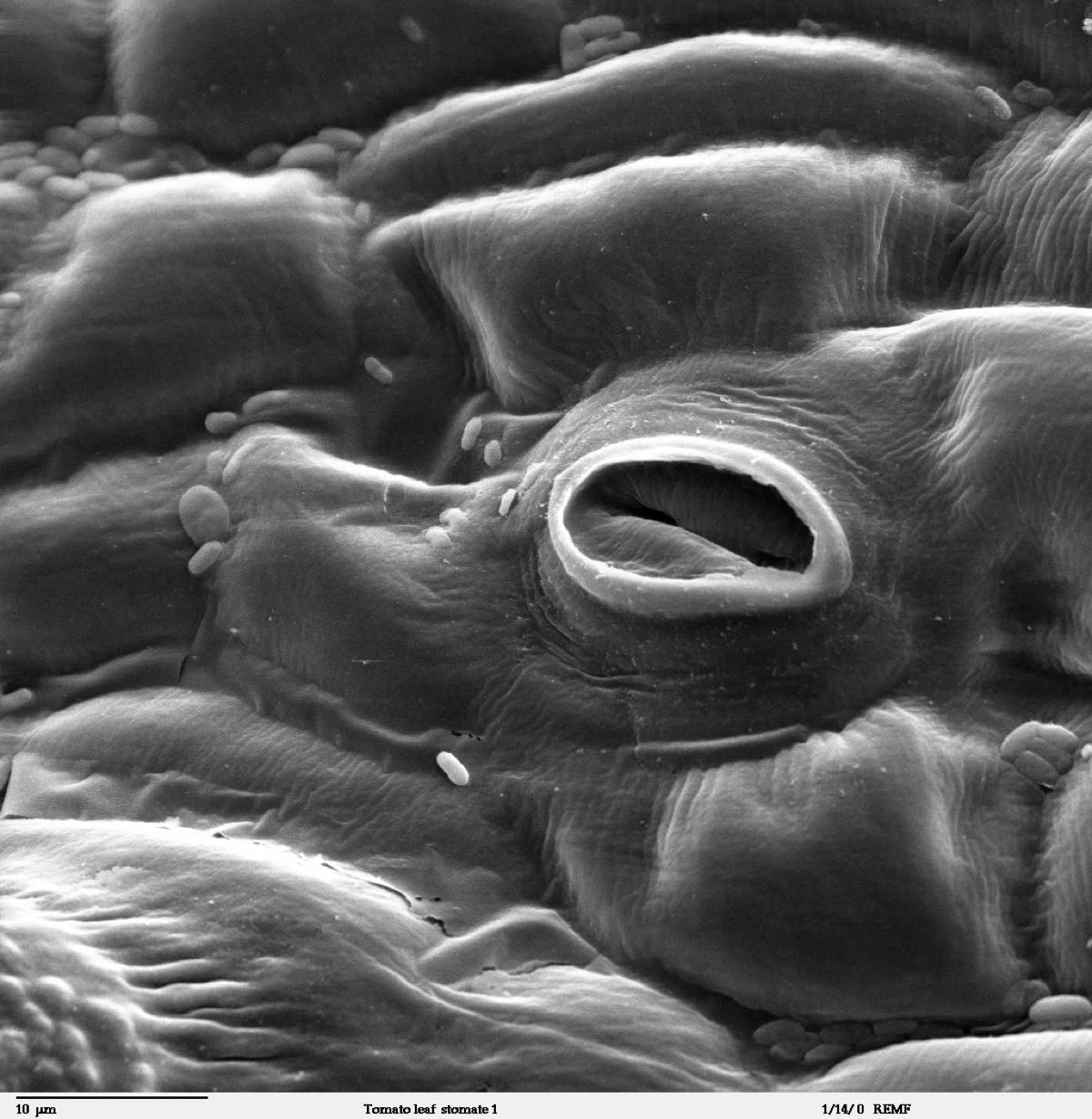
FIGURE 17.26 A stomata on the surface of a tomato plant leaf. Image Source: Dartmouth College Electron Microscope Facility, in the Public Domain.
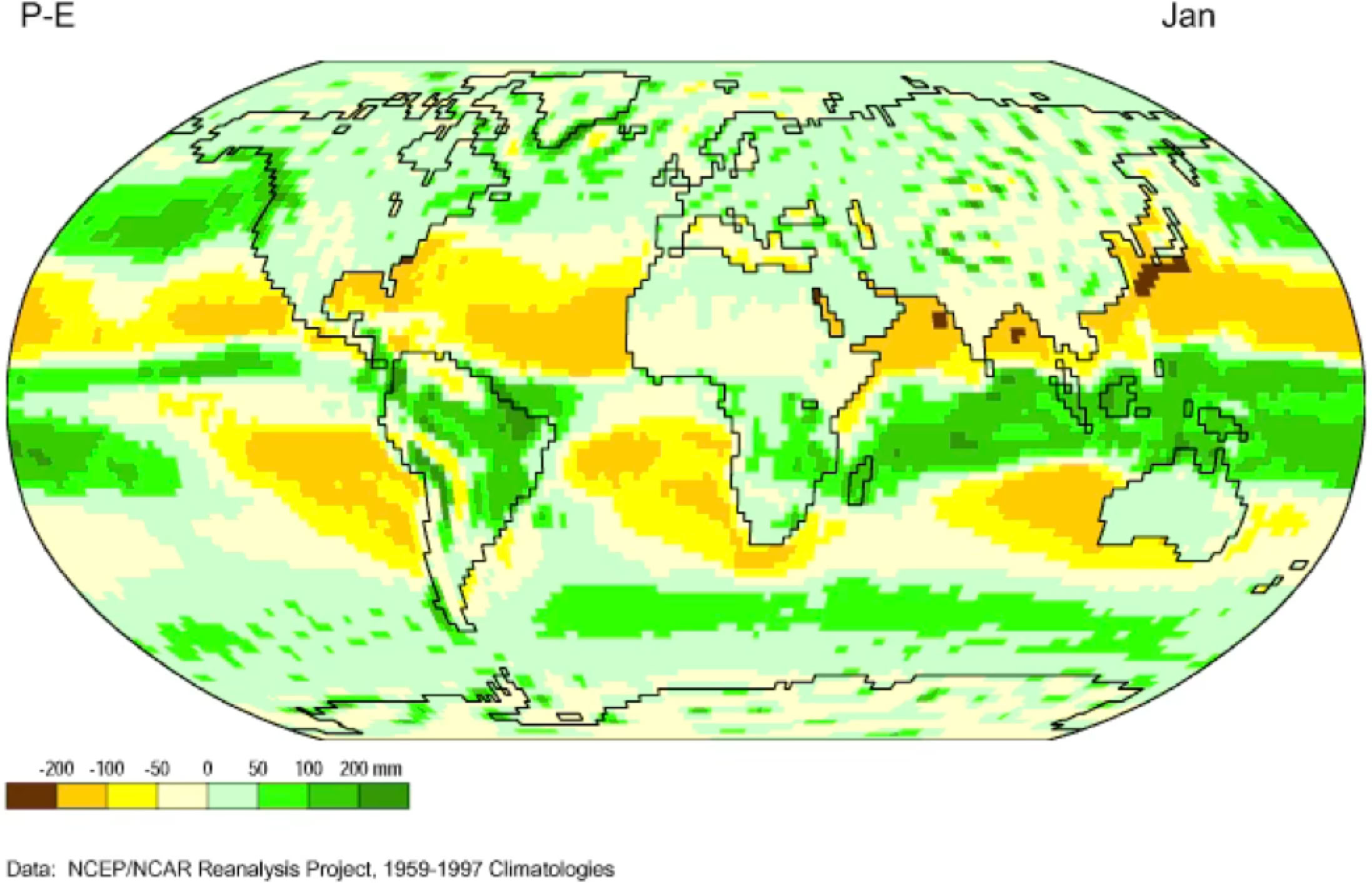
FIGURE 17.27 Precipitation minus evapotranspiration for an average January, 1959-1997. Image Source: Courtesy of J.J. Shinker, Department of Geography, University of Wyoming.

FIGURE 17.28 Precipitation minus evapotranspiration for an average July, 1959-1997. Image Source: Courtesy of J.J. Shinker, Department of Geography, University of Wyoming.
