Dissolved Solid Chemicals
Seawater is a mixture of water with various salts. Most of the water in the oceans and seas is believed to have originated from the condensation of water in Earth's early atmosphere. This water was initially released from the lithosphere as steam to the primitive atmosphere as the Earth's crust cooled and solidified. As the young Earth continued to cool, a threshold was reached at which atmospheric temperatures were low enough for condensation and precipitation. This precipitation began to accumulate in low-lying basins, forming our planet's first oceans and seas. Water has also been added to the oceans over geologic time through frequent volcanic eruptions. Some scientists have recently speculated that ice-rich comets entering the Earth's atmosphere may be another important source of water for the oceans.
Most of the salts and other dissolved chemical substances found in seawater have a terrestrial origin. Salts were released from rocks found on the continents through chemical and physical weathering. They were then carried to the oceans by stream runoff. Other sources of salts include the release of hydrogen sulfide, sulfur dioxide, and chlorine gas from volcanic eruptions. Over time, the concentration of these salts in the oceans increased until a balance was reached. Chemical and geological evidence indicate that the concentration of salts in seawater stopped increasing about 1.5 billion years ago. This balance occurred when processes that remove salts from the ocean equaled new additions. Natural processes that remove salts from the ocean include sea spray, the evaporation of shallow inland seas, leavingevaporitesedimentary deposits, and the loss of salts incorporated in living organisms' tissues and shells (Figure 19.9).
Only six elements and compounds comprise about 99% of sea salts: chlorine (Cl-), sodium (Na+), sulfur (SO4-2), magnesium (Mg+2), calcium (Ca+2), and potassium (K+) (Figure 19.10). The relative abundance of the major salts in seawater is constant regardless of the ocean. Only the amount of water in the mixture varies geographically because of differences in freshwater loss (evaporation) and gain (runoff and precipitation). The chlorine ion (Cl-) is the most abundant salt, making up 55% of the salt in seawater. Calculations of seawater salinity are made in parts per thousand (ppt) of the chlorine ion present in one kilogram of seawater. On average, seawater has a salinity of 35 ppt.
Dissolved Gases
Seawater also contains small amounts of dissolved gases. Many of these gases are added to seawater from the atmosphere through the constant stirring of the sea surface by wind and waves. The temperature and salinity of seawater determine the concentration of gases that can be dissolved into it from the atmosphere. Increasing the temperature or salinity reduces the amount of gas that ocean water can dissolve. Seawater's most abundant atmospheric gases include nitrogen, oxygen, carbon dioxide (much of this gas is transformed into bicarbonate HCO3 and carbonate CO3), argon, helium, and neon.
The carbon stored in the oceans is more than 50 times larger than in the atmosphere. Carbon exists in the ocean in three primary forms: 1% is dissolved carbon dioxide (CO2), 91% is in the form of bicarbonate (HCO3), and 8% is found as carbonate (CO3). Relative to the other important atmospheric gases, the amount of carbon dioxide dissolved in seawater is large relative to other gases found in the atmosphere (Table 19.2). Carbon dioxide concentrations are about 44 parts per million (ppm) near the ocean surface. From the surface, carbon dioxide concentration gradually increases with ocean depth (Figure 19.11). However, biological processes such as respiration and photosynthesis are not responsible for this variation. The combined effects of seawater temperature, salinity, and pressure mainly control variations in carbon dioxide concentration with ocean depth.
Dissolved oxygen (O2) concentrations in seawater range from 1 to 13 ppm. Like carbon dioxide, this variation occurs with ocean depth (Figure 19.11). The highest oxygen levels are found in a surface layer about 50 meters (165 feet) deep, where plant photosynthesis releases large quantities of this gas. Oxygen production by phytoplankton and other multicellular plants often leads to near-surface waters becoming supersaturated with oxygen. The action of breaking waves tends to release this excess oxygen, returning the seawater to a state of equilibrium or saturation. Vertical mixing also transports a significant quantity of dissolved oxygen produced near the ocean surface to greater depths. Below the surface layer, light levels are too low to support much photosynthesis. From about 50 to 800 meters (165 to 2600 feet) below the ocean surface, dissolved oxygen levels quickly drop because the net removal of oxygen by respiration and decomposition is more significant than oxygen gains. At depths greater than 800 meters, oxygen levels increase again. Below 800 meters, less oxygen is removed from seawater because fewer animals are respiring, and less organic matter is available for decomposition.
Seawater Salinity
The average salinity of the Earth’s surface seawater is about 35 parts per thousand (ppt). However, the salinity of seawater varies significantly across the surface waters of the five ocean regions and in the various smaller seas (Figure 19.12). Precipitation, evaporation, and freshwater runoff mainly control this variation. In the oceans, salinity tends to be highest in the subtropics, where evaporation losses greatly exceed freshwater inputs by precipitation. Around the equator and in the middle to high latitudes, precipitation is greater than evaporation, and consequently, ocean surface salinities in these regions are lower. Some locations in the Arctic Ocean have surface seawater salinities below 30 ppt. Freshwater runoff can also lower ocean salinity locally around the mouths of major rivers such as the Saint Lawrence, Mississippi, Amazon, and Congo.
The surface salinities of a sea surrounded by land usually exceed 35 ppt. This situation occurs because of lower additions of freshwater from precipitation and runoff and relatively higher evaporation rates. Some examples of salty seas include the Mediterranean, with a salinity ranging from 38 to 39 ppt, and the Red Sea, varying from 40 to 42 ppt. In some extreme cases, seas can become hypersaline if the output of freshwater from evaporation greatly exceeds the input. For example, the Dead Sea in the Middle East has a salinity of greater than 300 ppt!
Seawater pH
Seawater has a slightly alkaline pH, ranging from 7.5 to 8.5. This value is quite different from the pH of rainwater, which is slightly acidic, with a pH of between 5.0 and 5.6. Seawater is more alkaline than rainwater because of the presence of large quantities of dissolved salts. Of course, these salts are left behind when seawater evaporates, transporting water as vapor into the atmosphere, where it condenses or freezes to form precipitation.
Over the last 250 years, measurements indicate that the ocean’s average pH has decreased from 8.25 to 8.14 (Figure 19.13). Scientists have discovered that this drop in seawater pH is caused by the absorption of atmospheric carbon dioxide (CO2). Chemically, this carbon dioxide reacts with seawater to become diluted carbonic acid. The carbonic acid then reacts with seawater to produce bicarbonate ions (HCO3-) and hydrogen ions (H+). From 1751 to 1994, there has been a 30% increase in the number of hydrogen ions in our planet’s oceans, which are mainly responsible for causing pH to drop. Finally, this acidification trend coincides with rising atmospheric carbon dioxide concentrations from fossil fuel combustion and other human activities. Continued carbon dioxide emission into the atmosphere may cause the average surface seawater pH to drop to 7.82 by 2100.
Scientists are concerned about the potential negative global impacts of ocean acidification on living organisms. In particular, lower pH may harm marine organisms such as Foraminifera, Crustaceans, shellfish, sea snails, and coral that use calcium carbonate to build shells and other types of exoskeletons. Lower pH and higher dissolved carbon dioxide in seawater will cause two problems for these lifeforms: (1) A reduction in the availability of carbonate ions (CO3-2) required to build calcium carbonate (CaCO3) shells and other exoskeletons; (2) Structures made of calcium carbonate will be more prone to being dissolved. Both of these problems will, of course, affect these organisms' ability to survive.
Seawater Density
Water is one of the few substances that can exist on the Earth's surface in all three forms of matter: gas, liquid, and solid. At 0°C (32°F), liquid water turns to ice and has a density of approximately 917 kg/m³. Liquid freshwater at a temperature slightly above 0°C has a density of nearly 1000 kilograms per cubic meter. Seawater has a density greater than freshwater. The density of seawater generally increases with decreasing temperature, increasing salinity, and increasing depth. Surface seawater has a density between 1002 and 1028 kilograms per cubic meter because of differences in temperature and salinity (Figure 19.15). Seawater densities can be as high as 1050 kilograms per cubic meter in the deepest parts of the oceans. These high densities are due to the overlying weight of the water column.
Seawater freezes at a slightly lower temperature than freshwater. The freezing temperature of seawater also varies slightly with salt concentration. Higher salt concentrations lower the temperature at which freezing begins. At a salinity of 35 ppt, seawater freezes at -1.9°C (28.6°F). Most of the salts in seawater are forced out during freezing. For this reason, sea ice is essentially made of freshwater, containing very little salt. Exclusion of salt occurs because the molecules of various salts do not fit well within the orderly molecular structure of frozen water. Because of the density difference between ice (917 kilograms per cubic meter) and seawater (between 1002 and 1028 kilograms per cubic meter), ice floats on the ocean surface with about 10% of its volume above sea level (Figure 19.16).

FIGURE 1 Large amounts of dissolved calcium are chemically combined with dissolved carbonate by living ocean organisms to form shells made of the precipitate calcium carbonate (CaCO3). Image Source: Wikimedia Commons.

FIGURE 2 Relative proportions of dissolved salts in seawater. Image Copyright: Michael Pidwirny.


FIGURE 19.11 Concentration of dissolved carbon dioxide (CO2) and oxygen (O2) with ocean depth. Image Copyright: Michael Pidwirny.
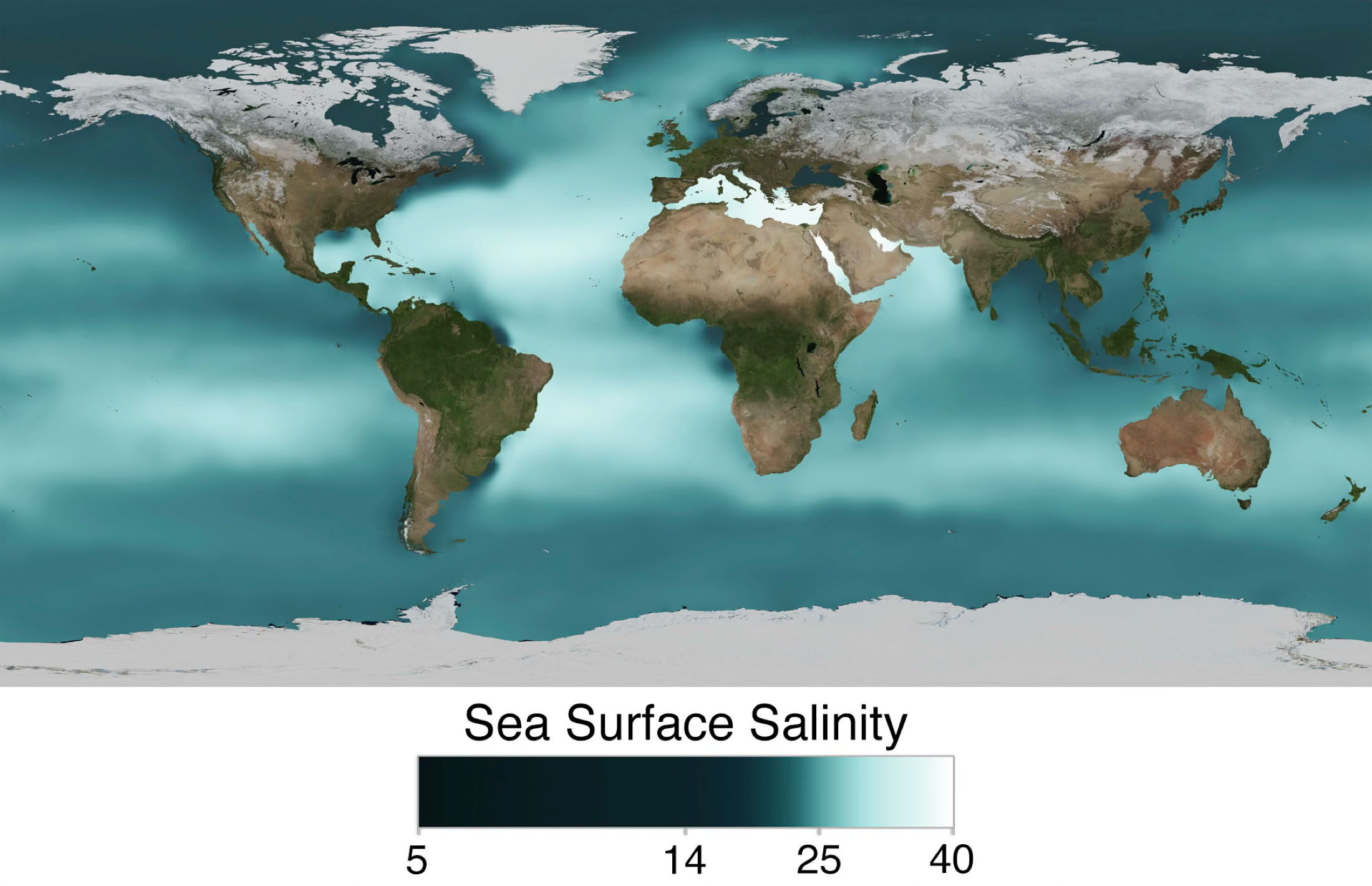
FIGURE 19.12 Global variations in average salinity of the surface seawater in parts per thousand. Image Source: NASA - Scientific Visualization Studio.

FIGURE 19.13 Calculated change in ocean surface seawater pH between the 1700s and 1990s from data analyzed in the Global Ocean Data Analysis Project. Image Source: Wikimedia Commons, image by Plumbago. This image is licensed under the Creative Commons Attribution-Share Alike 3.0 Unported license.
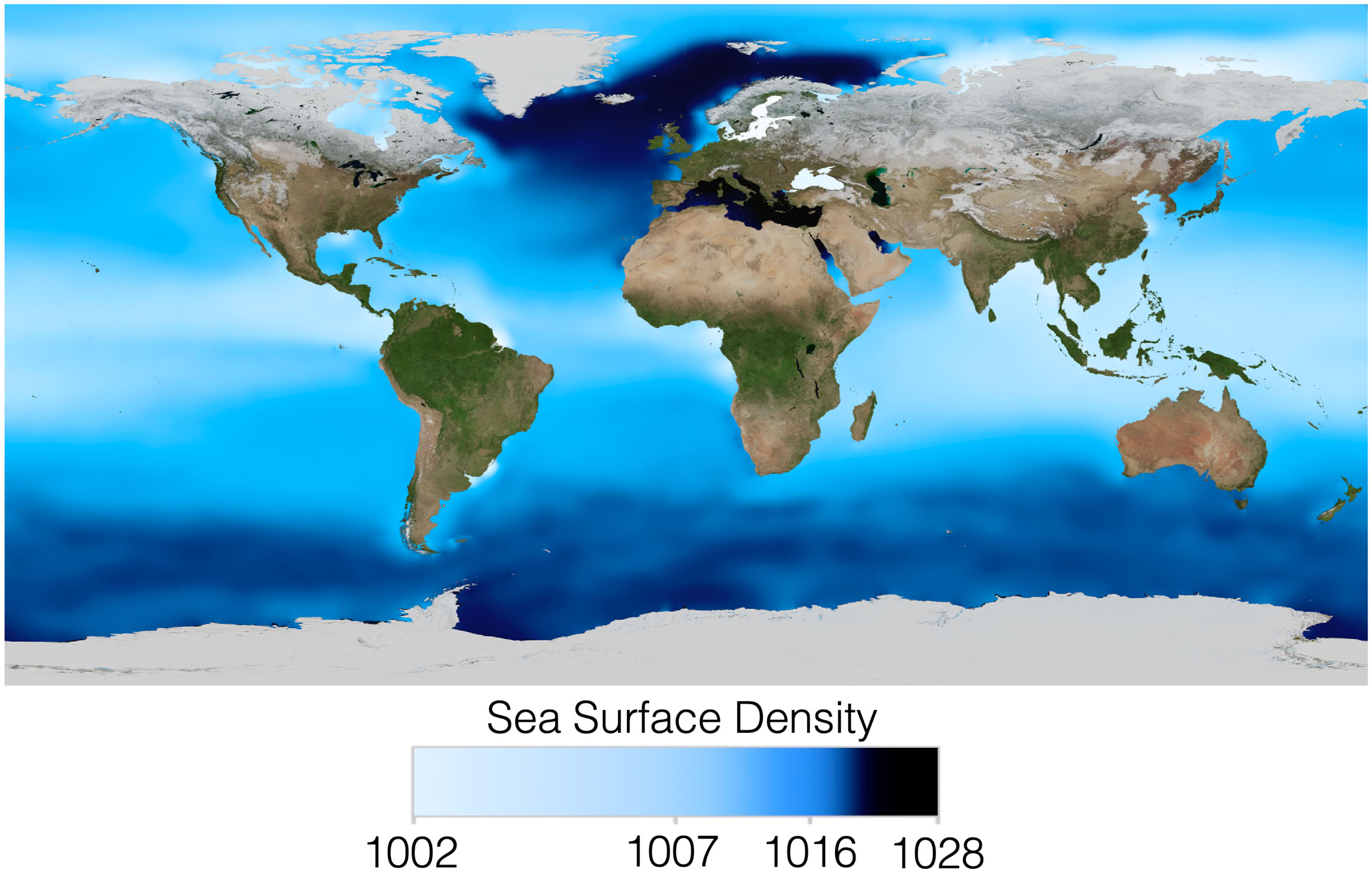
FIGURE 19.15 Global variations in surface seawater density in kilograms per cubic meter (kg/m3). Image Source: NASA - Scientific Visualization Studio.

FIGURE 19.16 Icebergs found floating on the ocean are made up mostly of freshwater. Icebergs float because the density of pure water ice is about 917 kg m-3, while seawater has a density of about 1025 kg m-3. Approximately 90% of the volume of an iceberg is found under water. Image Source: Wikimedia Commons, photo by Drew Avery. This image is licensed under the Creative Commons Attribution 2.0 Generic license.